Food Waste Has a Culture Problem
Judith expounds on the culture shift needed to fix our world's food waste problems.

Author
Judith Hochhauser Schneider
May 14, 2026
Food waste is no longer a technical problem. It’s a culture problem.
We have better forecasting tools, improved supply chain visibility, more efficient composting systems, and a growing number of apps designed to reduce and redistribute excess food. And yet, food waste persists at scale. Why? Because the future of food waste cannot be solved by one innovation, one platform, or one company. It can only be solved through collective action across the entire system. And that requires a culture shift in how we think about the entirety of the problem.
This cultural shift is not just about how organizations operate. It’s about how humans and communities think about food. It’s about reexamining the deeply embedded norms and incentives that shape how we interact with food. In our work with Seattle Public Utilities (SPU), I had the good fortune of interviewing numerous food businesses across the city of Seattle about food waste prevention — reducing surplus before it exists. I saw firsthand how waste is often treated not as a failure, but as the cost of delivering abundance and hospitality. In many cases, waste had become normalized, built into the system itself. One restauranteur I interviewed summed it up by saying, “Waste is often treated as the price of consistency.” Addressing food waste at scale will require more than better technology. It will require redefining what “good service,” “preparedness,” and even “success” look like across the supply chain.

Every part of the food system influences another part. This is not new. Decisions made by farmers shape what food flows into distribution. Distributors determine how food moves across regions. Hospitality companies decide how ingredients are prepared and served. Retailers influence purchasing behaviors and expectations. Cities shape policy, infrastructure, and incentives. And ultimately, consumers’ habits drive demand across the system.
Despite this interconnected reality, food waste efforts are sadly very fragmented. And far too often, there is little visibility into how the decisions within one node of the supply chain could unintentionally be driving food waste in others.
That systems-level complexity is what inspired the U.S. Food Waste Pact — a collaboration between ReFED and World Wildlife Fund (WWF) — to take a whole-chain approach to understanding food loss and waste. Through this effort, Global Impact Collective was commissioned to study the regional plum supply chain in the Pacific Northwest. We examined the full journey of plums from farm to retail, combining qualitative analysis with a human-centered lens to better understand pain points, incentives, and operational realities at each stage of the system.
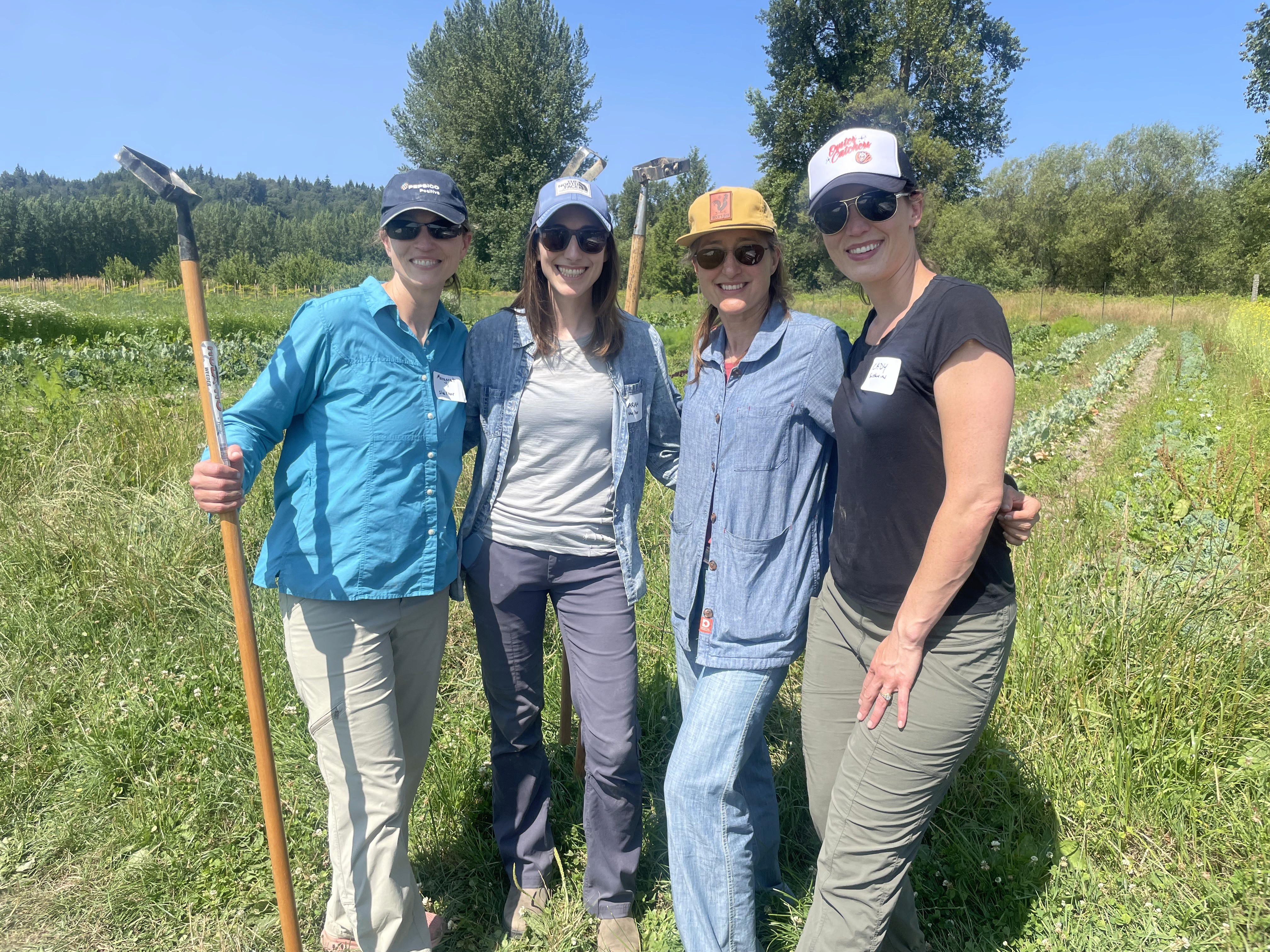
While tracing the path of black and red plums from orchards in Zilla, Washington, to retail stores in Portland, Oregon, I witnessed firsthand the disconnect. Perfectly edible fruit was often left behind at the farm to rot for myriad reasons that had as much to do with decisions on the farm as meeting the needs farther upstream made by the distributor or retailer.
What made the whole-chain analysis particularly useful was its recognition that optimizing one point in the supply chain is not enough. Reducing waste at scale requires understanding how actions, incentives, and constraints ripple across the entire system, and designing solutions collaboratively rather than in isolation.
Diversion is Important. Prevention Must Come First.
For years, the food waste field has focused heavily on diversion. Composting, donation, and redistribution programs like food banks have expanded significantly and play an essential role in reducing landfill impacts and feeding communities.
However, these approaches largely deal with food after it has already been produced and is at risk of being wasted. Prevention offers greater impact on greenhouse gas emissions.
During early work with SPU, we sought to better understand why existing food waste prevention campaigns and approaches were falling short and to explore alternatives to shame-based food waste campaigns. The city boldly asked, “Could reframing food as something that connects communities and engaging trusted local businesses and leaders inspire behavior change and reduce waste?” One insight from that work stood out clearly: Immigrant communities across the board wasted significantly less food. Not because of formal programs or advanced tools, but because of cultural norms. Their tendency is to treat food as something precious. Meals are planned carefully, leftovers are reused creatively, and waste is avoided wherever possible.
This highlights an important shift. Prevention often doesn’t begin with systems or infrastructure or tools. It begins with behaviors, incentives, and shared beliefs about the value of food. The future of food waste may depend less on managing excess food and more on redesigning the conditions that create that excess in the first place.
Human Behavior Still Sits at the Center
Technology is improving rapidly, and it has an important role to play. AI and digital tools can enhance forecasting, streamline inventory, improve waste tracking, and support more efficient operations.
But technology alone will not drive lasting change. People still make the critical decisions. They decide what to purchase, how much to prepare, how food is served, what gets saved, and what gets discarded. They also shape organizational culture and define what success looks like.
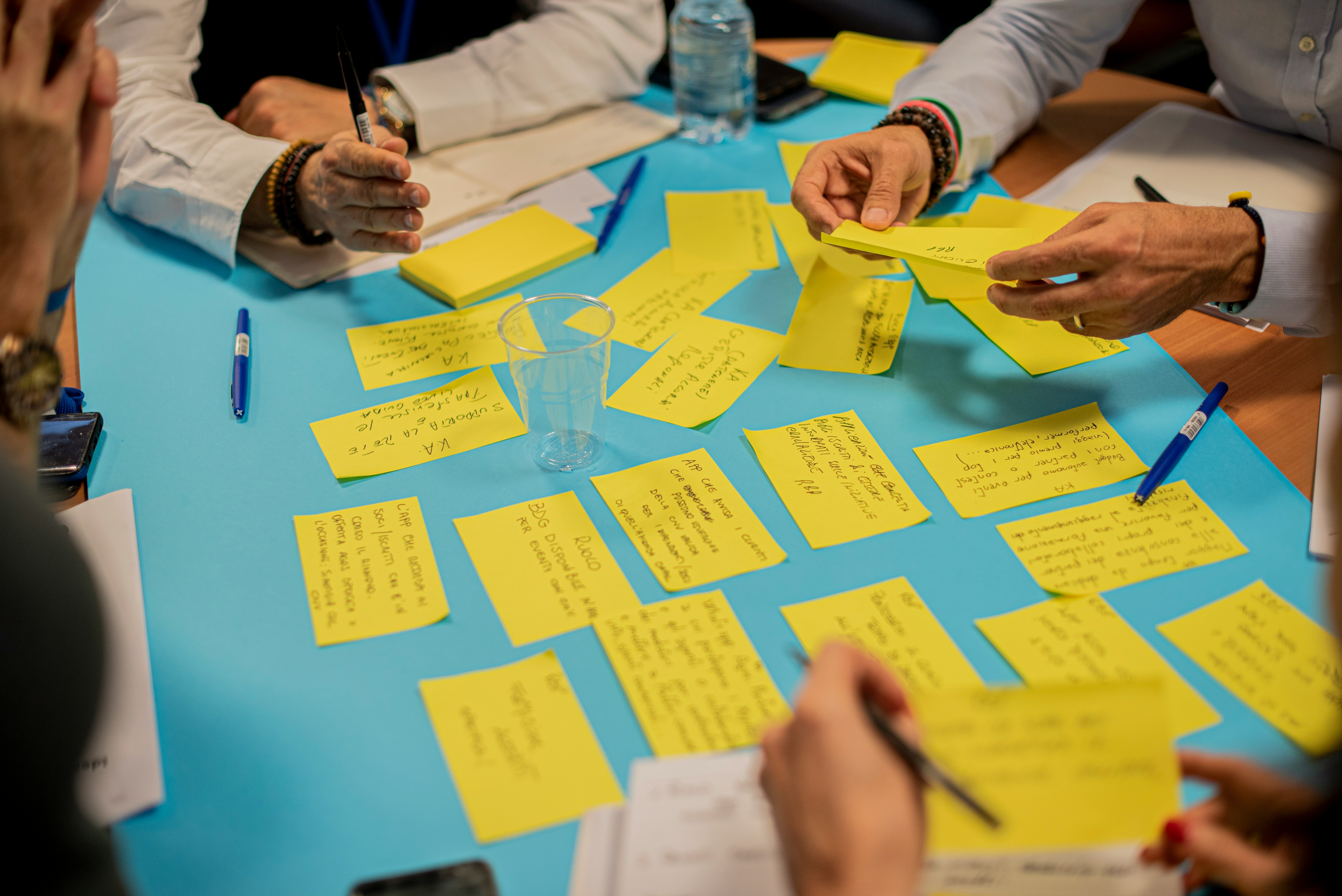
Our work with WWF and Sodexo reinforced this point. WWF was developing a food waste report outlining opportunities for Sodexo’s front- and back-of-house operations. But they knew that even well-designed sustainability strategies only delivered results when they are translated into practical, human-centered actions. To make the report actionable, WWF partnered with us to design and deliver an interactive workshop that conveyed the findings for frontline teams and gave them space to internalize and create a sense of ownership for change to stick. It was an important step in creating cultural shifts inside the organization.
What this points to is a deeper challenge. The hardest part of food waste work is not identifying solutions. It is aligning people, operations, incentives, and culture around those solutions in a way that lasts.
So, What’s Next?
There is a growing amount of promising work, including collaborative efforts emerging from Seattle in the hospitality space. Hotels and food service operators are experimenting with new approaches, from kitchen-level waste tracking to redesigned menus and smarter procurement practices. Not in isolation, but together.
If food waste is fundamentally a culture problem, then the path forward depends on better cultural alignment. This raises a set of important questions. What do we want the world to look like? How would we truly connect regional food waste ecosystems? How do we inspire and scale prevention efforts, not just diversion programs? How can cities, businesses, and communities design solutions together rather than in parallel? As AI becomes more common, how do we ensure human behavior and culture remain central? And how do we tap into people’s sense of purpose and motivation to drive lasting change?
The ReFED Summit feels like an opportunity to explore these questions more deeply and more personally. At last year’s ReFED Summit in Seattle, I stood on stage during a breakfast panel overlooking a standing-room-only crowd and one thing was clear: there is real energy for locally rooted, cross-sector collaboration. People are eager to connect their work and think more holistically. This year, those conversations feel like they are expanding. More sectors are involved, more stakeholders are showing up, and there is a stronger emphasis on collective action rather than isolated innovation.
This year, I would love to continue the conversation at the ReFED “Live Offers and Needs Market”, or over coffee and hear what others are seeing, building, and imagining for the future. Because solving food waste won’t come from a single breakthrough. It will come from working together, in new and more connected ways.