Back in Japan. Still thinking about the food.
James reflects on his trip to Japan and the balance between locally grown food and an increasingly import-dependent food system.

Author
James Bernard
June 4, 2026
I just spent nearly two weeks traveling through Japan — around Osaka, Kobe, and into the mountains — visiting my daughter Olivia, who teaches there through the JET program. It was my second trip in six months.
I wrote a post in November focused on the remarkable agritech innovation I saw in Tokyo and Osaka. This visit took me somewhere quieter, which in some ways, was more thought-provoking.
One night we stayed at a monastery in Koyasan, the sacred birthplace of Shingon Buddhism in 816 AD.
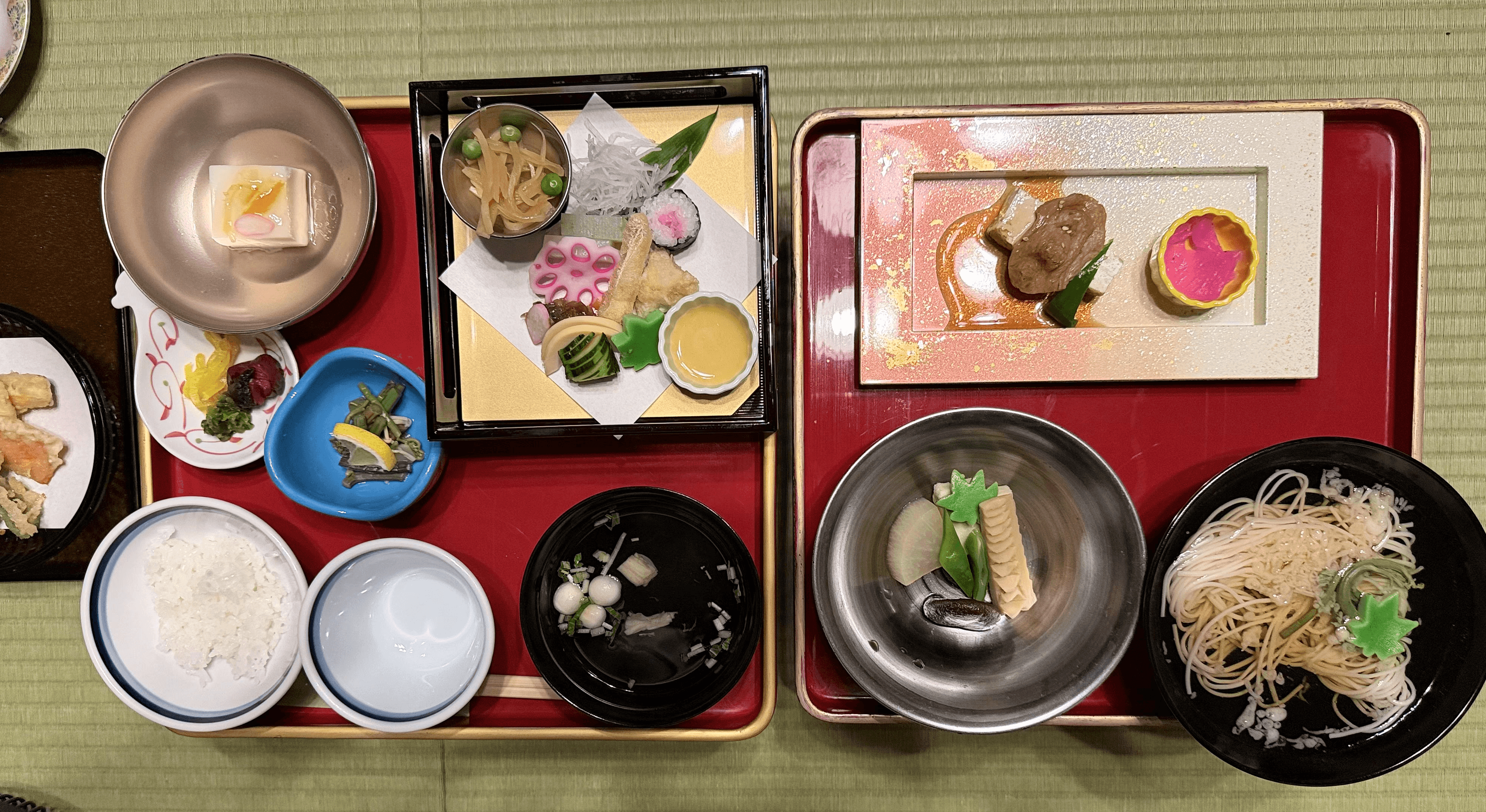
Dinner was vegetarian, locally sourced, and served in small, beautifully presented, and precise portions that wasted nothing. It was a meal that was probably similar to what has been eaten there since the area was first settled.
That dinner crystallized something I'd been circling around: there are really two food Japans. One is ancient, local, and plant-forward — still visible in places like Koyasan. The other is modern, urban, import-dependent, and increasingly disconnected from the land. The gap between them is what the numbers below describe.
I realized that Japan doesn't need to invent a sustainable food system. It already built one over centuries. The question is whether it’s possible to return to that system.

The gap between tradition on modern ways of eating is widening
Japan's food self-sufficiency rate (the amount of food the country produces itself) has been at 38% for four consecutive years. This is nearly 20 points below the government's 2030 target. For context, that's down from 73% in 1960. Meanwhile Japan has lost more than 3 million people in the last five years, with rural areas bearing the brunt. Farmland is being abandoned and the average farmer is 69 years old.
Traveling by train through the countryside, I saw it. The terrain tells part of the story; about 60% of Japan is mountainous, and the average farm is just 2.2 hectares (compare that to 175+ in the US). Hokkaido is the exception, with farms averaging around 30 hectares. Not coincidentally, this is where Japan's most commercially viable agriculture happens: dairy, beef, wheat, potatoes, and sugar beets — crops that benefit from scale and mechanization.
Technology is just part of the answer
I wrote in November about the impressive wave of agritech, including Kubota's autonomous tractors, Spread Co.'s vertical farms producing 30,000 heads of lettuce daily, and the WAGRI data platform. That activity is genuine and accelerating; Japan is now the third-largest agrifoodtech funder in Asia Pacific.
But Japan's own Ministry of Agriculture has been candid: there are too few successful startup models, capital inflows are stagnant relative to the IT sector, and most innovations address either premium niches (vertical farming for high-value crops) or the labor crisis (autonomous machinery), neither of which address the fundamental challenge of expanding the domestic caloric base.
The Koyasan meal keeps coming back to me
The traditional Japanese diet — rice, vegetables, fermented foods, fish, small portions — is almost perfectly aligned with what Japan's small, embedded farms can produce. It's low-carbon, low-waste, and deeply local. It worked for centuries.
The disruption to the traditional way of eating largely happened after WWII: American occupation food policy, school lunch programs built around bread and milk, and decades of westernized consumer preferences have shifted Japan far from what its landscape can support.
Many government programs since then — the chisan-chisho movement (local production for local consumption), the national shokuiku food education campaign, the push for washoku (traditional Japanese cuisine) to be recognized by UNESCO — have tried to close this cultural gap. While there have been some successes, none have moved the self-sufficiency needle.
So what does this mean for those of us in food systems?
Japan is a powerful case study in a paradox I think about constantly: a society can have extraordinary innovation capacity, deep cultural wisdom about food, and sincere policy intent yet struggle to formulate a connection to people and practices at systemic scale. Technology solves the labor problem. It doesn't solve the structural, cultural, and demographic problems underneath it.
What Japan may need — and what I'd argue is underinvested globally — is the human-centered, multi-stakeholder work of rebuilding the relationships in a food system: between farmers and consumers, between urban demand and rural supply, between traditional knowledge and modern infrastructure.
The monastery had that, but it seems that most of Japan's food system does not (at least not yet).