Urban Agriculture
Food Future
Japan’s Food Future: Reimagining Urban Agriculture for a Crowded Planet
James takes a trip to Japan and explores innovative solutions to food security

Author
James Bernard
December 4, 2025
I recently returned from a seven-day trip to Japan visiting my daughter, who teaches in Kobe through the Japan Exchange and Teaching (JET) program. Between exploring and catching up, my mind kept returning to the question that occupies much of my professional life: how do we build truly sustainable food systems?
Walking through Japan's cities, I was struck by the sheer density of food. Every alley teems with tiny restaurants. Every shopping center features sprawling basement food halls brimming with fresh fish, prepared food, and produce. The abundance seems endless until you consider the mathematics beneath it: 92% of Japan's population lives in urban areas, yet only 38% of their food comes from within their borders. Where does it all come from? And more critically, where does it all go?
The Demographic Crunch
Japan's agricultural challenges mirror — and magnify — trends we're seeing globally. Since World War II, the number of farmers has plummeted by more than 65%. The average farmer is now 69 years old. Rural areas are emptying as young people migrate to cities, leaving farmland abandoned and agricultural knowledge at risk of disappearing with an aging generation.
Yet this same country leads the world in robotics, artificial intelligence, and precision manufacturing. The question isn't whether Japan has the technology to solve these problems — it's whether the country can deploy it fast enough.
When Silicon Meets Soil
What's emerging is remarkable: a new model where technology doesn't just support agriculture, it fundamentally reimagines it.
Consider the scale of innovation already deployed: Kubota's Agri Robo Series has put 700 autonomous tractors, transplanters, and harvesters on Japanese farms. These aren't supervised machines — they operate completely unmanned, adjusting to terrain and crop conditions in real-time. Inaho's tomato-harvesting robots work at night, using AI vision systems to identify ripe fruit and harvest 40% of the crop while human workers sleep. AGRIST's 16-kilogram robot picks bell peppers in partnership with Miyazaki farmers who helped design it.
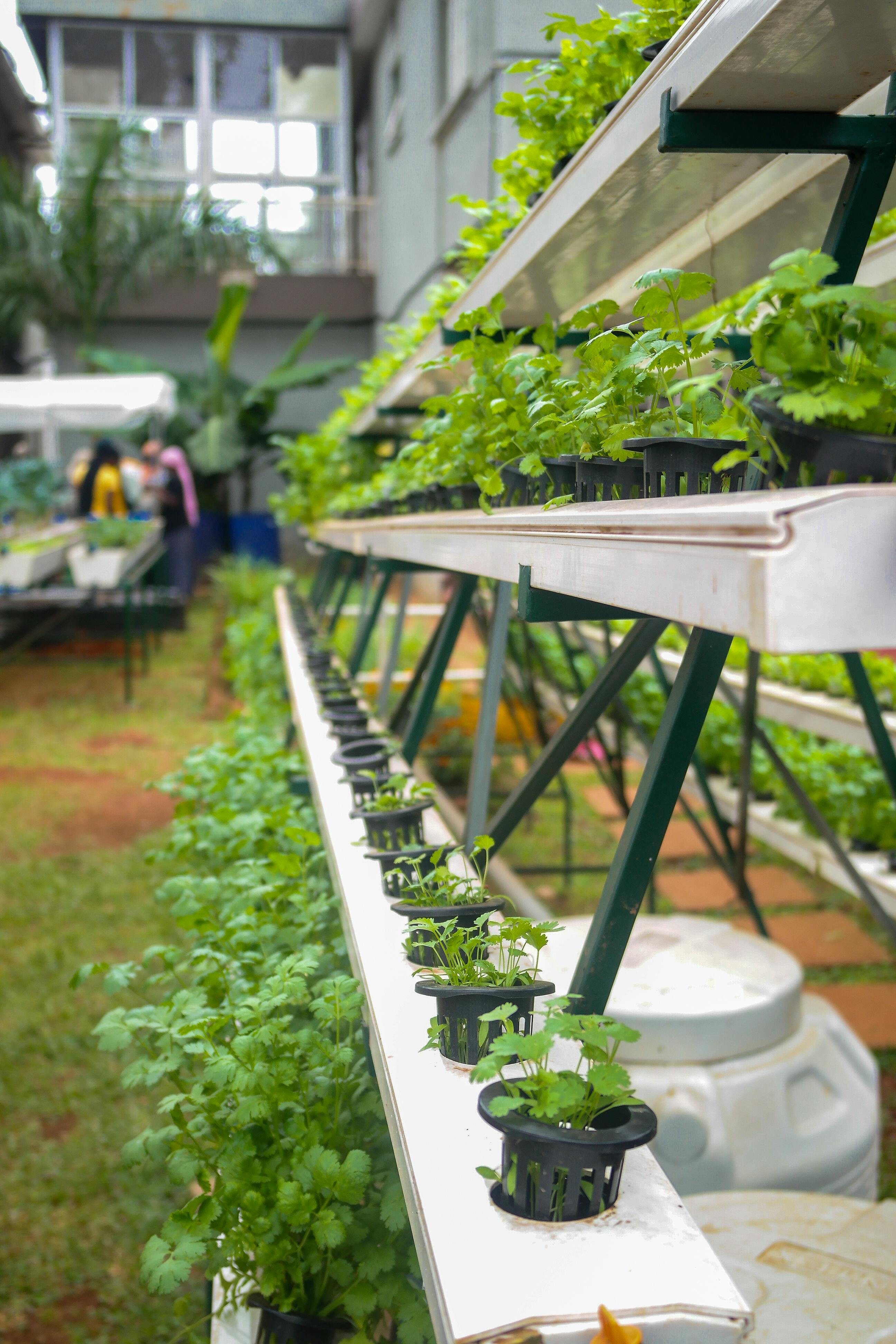
But the real revolution may be happening indoors. Spread Co., operating what may be the world's most sophisticated vertical farm, produces 30,000 heads of lettuce daily in climate-controlled facilities where robots handle everything from seeding to harvest. Their pesticide-free lettuce has now exceeded 100 million servings sold, proving that vertically farmed produce can compete commercially at scale. With over 200 vertical farms now operating across Japan, the country has become a living laboratory for urban agriculture.
The data infrastructure supporting these physical systems is equally impressive. Japan's WAGRI platform aggregates weather, soil, and production data from public and private sources, giving farmers AI-powered insights that once required decades of experience. Companies like Fujitsu and NEC have built cloud platforms that turn farming into a data science problem by optimizing every input from water to fertilizer to light.
Closing the Loop
Innovation extends beyond production to the entire food cycle. Japan generates 5.22 million tons of food waste annually — a figure policymakers aim to halve by 2030. The Shinagawa Development Project exemplifies the new thinking: a 9.5-hectare redevelopment that converts restaurant food waste into biomass energy, becoming Japan's first project accepted into the international Climate Positive Development Program.
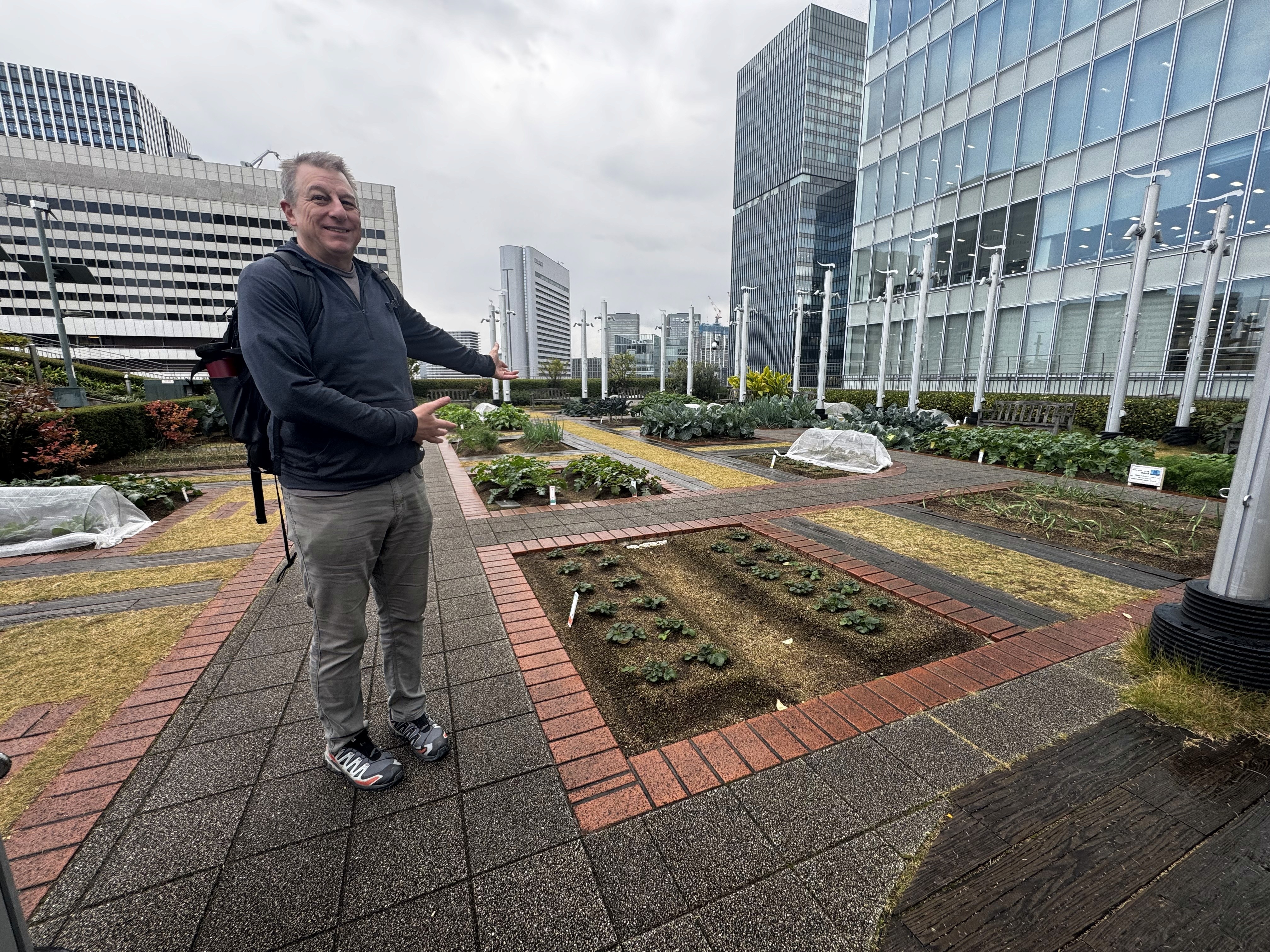
Meanwhile, Tokyo's urban farmers maintain 4,000 hectares of productive farmland within city limits through the Productive Green Space program, which offers 30-year tax incentives to landowners who keep farming rather than developing their plots. It's an elegant policy solution that preserves urban agriculture while recognizing the economic pressures landowners face.
Back in the States, I recently attended a conference where I met Hirotaka Tanata from UnlocX. The organization is working on sustainable food systems as part of the Tokyo's goal to become net-zero by 2050. Another organization, Future Food Institute, recently opened the expanded Tokyo Living Lab — a two-floor facility in the historic Kyobashi district, where its fish and vegetable markets have been the center of Tokyo's food culture for over 300 years. Developed in partnership with Tokyo Tatemono, one of Japan's leading real estate developers, the Living Lab features a full test kitchen, a vertical farm demonstration space, and open areas for market validation and R&D. The facility serves as the hub for the "Regenerative City Tokyo" project, demonstrating that the Food Future Institute’s original Italian model for environmental prosperity and urban development can coexist in a megacity. It's building an ecosystem where innovators, chefs, farmers, and agribusinesses can prototype solutions for feeding dense urban populations sustainably.
A Blueprint for Our Urban Future
Here's what makes Japan's approach so compelling for those of us working in sustainable food systems globally: they're not treating urban density as agriculture's enemy, but as its opportunity.
By 2050, two-thirds of humanity will live in cities. We simply cannot feed everyone efficiently by extending traditional rural agriculture. Japan is showing us a different path: bring food production into cities through vertical farms and smart greenhouses, use AI and robotics to overcome labor shortages, create circular systems that turn waste into energy and compost, and deploy policy incentives that make sustainable development more profitable than conventional approaches.
The integration of these elements — technology, policy, circular design, and multi-stakeholder collaboration — offers something rare in the sustainability space: a systems-level solution that's already working at scale.
Japan faces existential questions about its food future. But in grappling with demographic shifts, limited arable land, and extreme urbanization, they're building models the rest of the world will need as we move deeper into the middle of the century. The innovations emerging from Japan’s labs, vertical farms, and automated fields aren't just solving Japanese problems — they're prototyping the kind of agriculture that might feed billions of people heading toward cities in the decades ahead.
The question isn't whether this technology-driven, urban-integrated approach to food systems will spread globally. It's whether it can spread fast enough.
Photo on Left: James standing at a rooftop farm in downtown Osaka.