The Ajax and the Lingcod: What My Mom’s Fishing Boat Taught Me About Food Systems
On the grit behind our seafood, the invisible economics of small-boat fishing, and what it will take to keep the people who feed us going.

Author
Carey Renn
June 16, 2026
The Teacher Who Fished
Growing up, my mom was a teacher. She taught Family Life Education at Medford Senior High School in southern Oregon and built a reputation for tackling the subjects other educators often avoided. Drugs, divorce, teen pregnancy, and the practical realities of life were all fair game if they helped students better navigate the world.
That willingness to lean into discomfort defined her career. It earned her national recognition, but it did not make her financially secure. Like many teachers, she supplemented her income however she could. She coached skiing. She coached track. She taught herself how to coach the triple jump from books because that was how she approached every challenge: figure out what needed to be known and learn it.
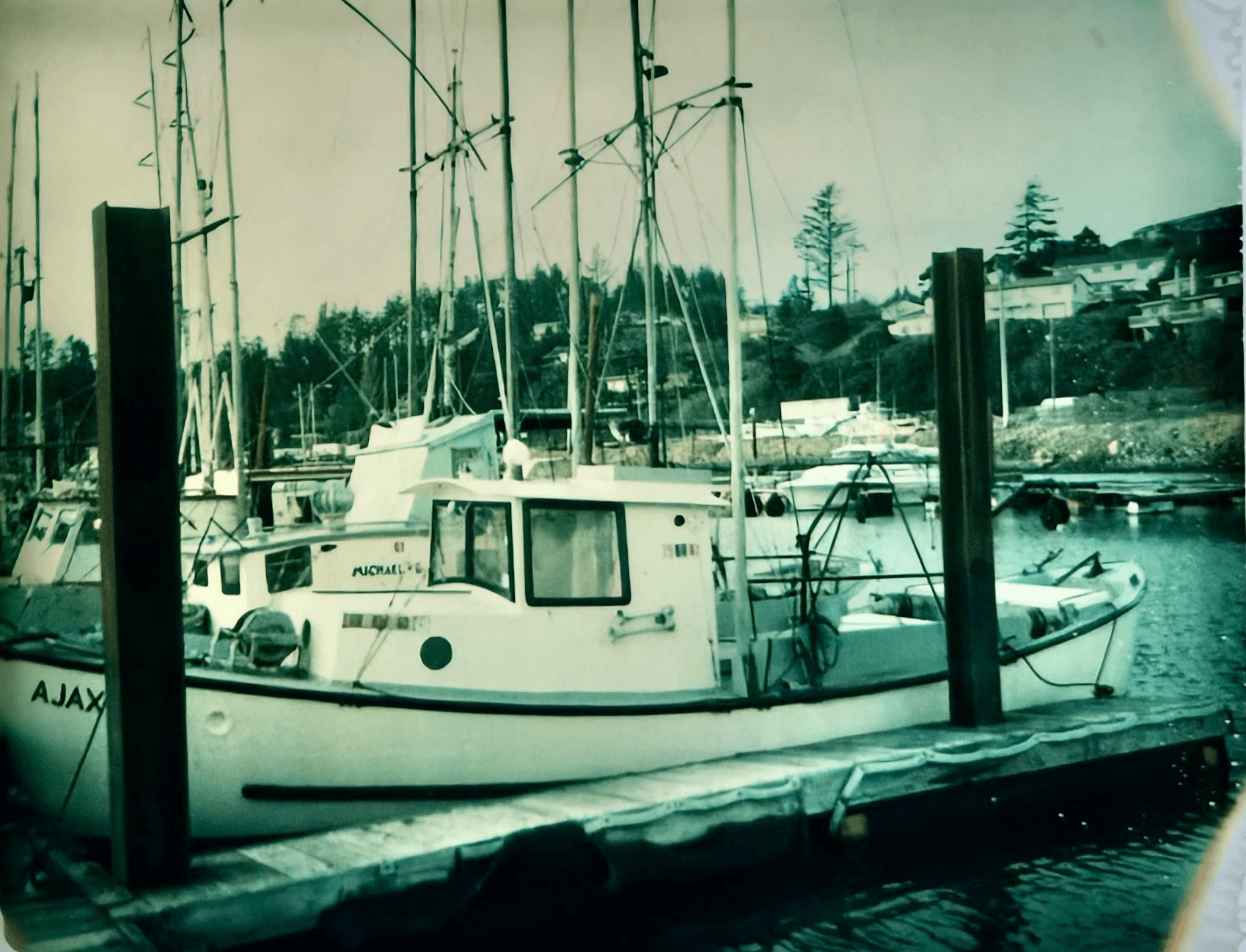
Then, together with fellow teacher Buz Casper, she bought a fishing boat called the Ajax. They fished out of Brookings, Oregon during school breaks and started with virtually no commercial fishing experience. What they lacked in knowledge they made up for with curiosity, persistence, and the generosity of local fishers who recognized two complete greenhorns and helped them anyway.

The Lingcod Lesson
There is a story from those early years that perfectly captures how new they were to commercial fishing. One day they hauled in a massive fish that looked like it had lost a fight with evolution. It was all teeth, attitude, and poor life choices. Convinced they had caught some sort of aquatic gargoyle, they tossed it back overboard.
Back at the dock, Buz described the fish to a local shop owner, “That was a lingcod.” A lingcod is one of the most prized fish on the Oregon coast. Rich, sweet, and often compared to lobster, it is exactly the kind of fish you hope to catch.
The shop owner promptly called the local radio station. By the time Buz walked back toward the Ajax, the story had spread through the harbor. Fishers were laughing so hard they could barely stand. Two rookie fishers had landed the catch of the day and thrown it back because they thought it was too ugly to keep.
When asked by one of these seasoned fishers if he’d heard the hilarious story, Buz played as though he too couldn’t believe the foolishness of these two rookie fishers.
What You Learn on a Small Boat in Serious Water
I spent enough time on the Ajax to understand what the work requires. Nothing about fishing is as simple as it looks. Reading a fish finder in rough water, setting lines correctly, cleaning fish efficiently, and knowing where to fish all require skill that only comes through repetition and experience.
I was also, on more than one occasion, genuinely afraid. A small boat in serious swell is a lesson in the scale of the ocean and the limits of human confidence. The ocean does not adjust to accommodate you.
Those summers taught me that food production depends on expertise, risk, and hard-earned knowledge that cannot be learned from AI. Someone has to know the tides, the weather, the equipment, the species, and the countless small decisions that determine whether a day on the water is productive, profitable, or dangerous.
The Freezer That Was Always Full
One year my mom won a freezer at the local grocery store. For years afterward, it was never empty. Salmon, tuna, snapper, and whatever else the ocean provided became staples in our household.
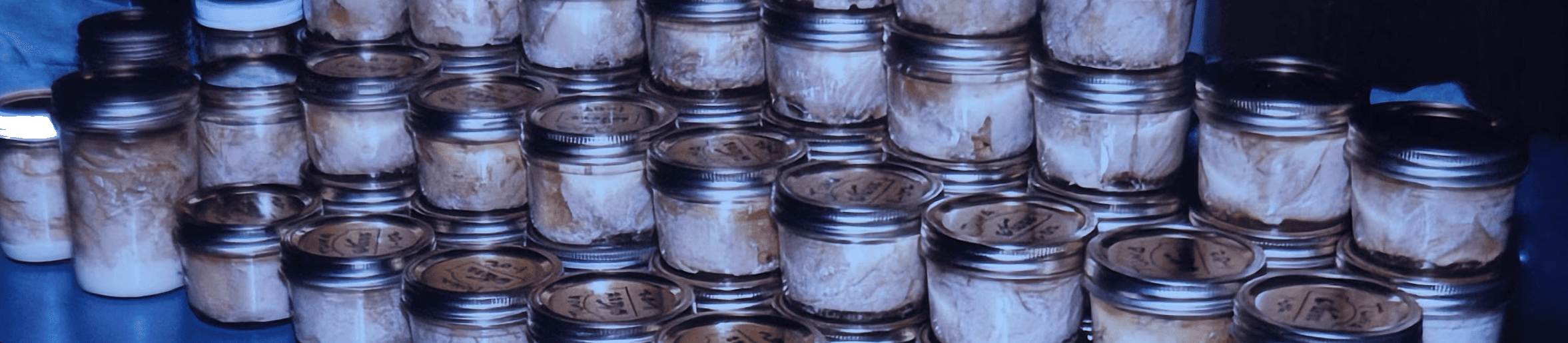
We battered and fried tuna tail, still one of the best things I have ever eaten and something I have never once seen on a restaurant menu. Every summer my mom canned tuna for days at a time, producing jars of rich, golden fish that bore little resemblance to anything sold in a grocery store.
As a kid, that food tasted like survival. Looking back, it was the product of resourcefulness, grit, and determination. I did not think of it as food systems work at the time. I thought of it as my mom doing what my mom did.
Small-Boat Fishing and the People Who Do It
The Oregon coast has a commercial fishing culture that runs deep. Brookings is a working harbor with a working fleet, serious weather, and a community of people whose livelihoods depend on bringing fish to shore and selling them at prices that justify the risk.
What my mom and Buz were doing was not unusual. Small-boat, owner-operated fishing has long attracted people balancing multiple income streams to stay solvent. The work demands physical toughness, technical skill, ecological knowledge, and resilience. Most industries would consider that combination extraordinary. Fishing communities consider it the baseline.
Today, that world is under pressure.
Pacific salmon stocks have been declining for years, driven by warming ocean temperatures, changing prey availability, degraded river systems, and broader ecological shifts. The coho and chinook runs that once supported communities like Brookings are a fraction of what they were in previous generations.
The economics have tightened alongside the ecology. Fuel, gear, permits, insurance, and vessel maintenance costs continue to rise while many dockside prices remain stagnant. Global seafood markets often reward scale and volume over quality, provenance, and stewardship, creating a system where some of the most skilled fishers struggle to capture the value they create.
The workforce is aging as well. The knowledge specific to these waters, species, and seasons is leaving the industry faster than it is being replaced. That loss is not just economic. It represents decades of ecological observation, local adaptation, and practical expertise that cannot be downloaded, automated, or quickly rebuilt once it disappears.
Healthy Fisheries, Fragile Livelihoods
The Pacific Northwest has some of the most rigorously managed fisheries in the world and that is worth celebrating. But sustainable management of a fishery resource is not the same thing as a sustainable livelihood for the people who fish it.
Too often, those two conversations get collapsed into one. A fishery can be biologically sustainable while the fishing community itself struggles. We can point to healthy management frameworks, science-based quotas, and conservation gains while overlooking the economic realities facing the people expected to operate within those systems.
Keeping small-boat fishers on the water requires healthy fish populations, but it also requires functioning markets, fair access to buyers, thoughtful regulatory design, and pathways for the next generation to enter the industry.
Independent fishers often produce extraordinary seafood but lack direct access to consumers willing to pay for quality and provenance. Many operate within supply chains that reward scale rather than stewardship. At the same time, regulatory processes can unintentionally place disproportionate burdens on smaller operators who lack the resources of larger commercial interests.
Small-scale fishers are not simply resource users. They are observers, stewards, and holders of valuable ecological knowledge. They understand shifts in species distribution, changing ocean conditions, and local ecosystem dynamics in ways that complement scientific monitoring. Fisheries management is strongest when that knowledge is part of the conversation.
Consumers have a role to play as well. Understanding who caught your fish, where it came from, and what it took to bring it to shore is not simply a marketing story. It is one way of moving value back toward the people who generate it.
Sustainable fisheries depend on sustainable fishing communities. One without the other is not enough.
Why This Is Our Work
At Global Impact Collective, we work across food systems with producers, supply chains, funders, and policymakers because the people closest to the work often hold the knowledge most critical to solving the problem.
My mom’s summers on the Ajax were a version of that lesson in practice. She and Buz were practical people doing difficult work inside a system that did not make it easy. They were producing real food for their families and communities while learning an entirely new trade from the ground up.
The lingcod story still makes me laugh. Two teachers bought a fishing boat, caught one of the most prized fish on the Oregon coast, and threw it back because they did not know what they were looking at.
But it is also a reminder. The knowledge that turns an ugly fish into a valuable catch, or a stretch of ocean into a productive fishing ground, lives in people. When those people leave an industry, that knowledge leaves with them.
That lesson extends far beyond fishing. Across food systems, we are losing practical knowledge, local expertise, and generational experience at the same time we are asking producers to navigate increasing environmental, economic, and regulatory complexity.
If we want resilient food systems, we need more than healthy ecosystems. We need markets, policies, and institutions that allow the people who feed us to keep doing the work. My mom figured that out aboard the Ajax, one trip at a time. The rest of us are still catching up.