SUSTAINABILITY STRATEGY
Sustainability Got Its Seat at the Table. Now Comes the Work.
James on why finance, treasury and procurement now decide whether a sustainability program lives or dies.

Author
James Bernard
September 8, 2026
A sustainability leader sent me this email recently:
"I used to just have to convince the CEO. Now I need to talk to procurement, finance, and treasury. Who are these people and what do they want??"
She was a little flummoxed by the new stakeholders in her orbit, while also recognizing that it now meant that sustainability had a seat at the business table. For most of her career, success looked like announcing new commitments, publishing the annual sustainability report, building partnerships, or defining new public targets. Getting buy-in meant going to the Chief Sustainability Officer, who would take it to the CEO and the comms team. Job finished.
The landscape has changed a lot in the last 18 months. The people who now decide whether her program lives or dies sit in different parts of the company. Each — whether finance, treasury, or procurement — bring an entirely different set of questions, new perspectives, and a focus on the bottom line.
I’ve had enough similar conversations lately to think that this is the new trajectory rather than a passing fad. It’s clear that the lines of accountability for corporate sustainability teams have created (or are in the process of creating) a structural shift. It means that sustainability teams need to reframe their value around costs and benefits, risk reduction, and return on investment.
The numbers behind the move
The numbers support this supposition. According to a study by Trellis, from 2024 to 2025, different corporate teams were hiring sustainability roles, including legal (up 14%), finance (up 11%), and procurement (up 10%), while headcount in standalone sustainability and supply chain teams fell by about 10%. A role that barely existed two years ago, the ESG controller, now sits inside more than half of Fortune 100 companies. It is a finance position that owns sustainability data the way a controller owns the financials.
Budgets have been following the same path. Originally, many sustainability teams had their own opex budgets, much like marketing or other overhead resources. But that's been shifting. Between 2020 and 2024, more than 80% of the funding that consumer packaged goods companies put into sustainable agriculture came from other internal sources: retained earnings, corporate bonds, operating budgets, according to EDF+Business. This trend means the budget comes from the P&L, giving the people who steward the P&L a say in how it gets spent. The trend toward new reporting or accountability relationships is a direct consequence of where the money now originates.
This transition is ultimately good, but also hard
In the aggregate, this is a healthy development. For years the standing critique of corporate sustainability was that it lived at the edge of the business, funded as reputation insurance and disconnected from how the company made and moved product.
Being accountable to finance, treasury, and procurement closes that gap. It puts sustainability inside the decisions about capital allocation, supplier contracts, and operational risk, which is the right place for it to change outcomes. If sustainability teams can justify the value of their work to a treasurer, it will be taken seriously. Many who work in sustainability spent years asking for a seat at the table and a core function in the business. This is what it looks like when the request is granted.
Change in any organization is hard and puts more pressure on teams that just want to do the work. This transition is no exception, and it's largely a function of how most sustainability teams were built and have functioned. It leads to two primary challenges:
Developing a New Language: The first challenge is that many sustainability professionals have backgrounds in environmental science, policy, advocacy, and international development. Those are the right backgrounds for understanding a watershed, a sourcing region, or a farming community. For all that they bring to the important technical work that sustainability teams do, such backgrounds don't always lend themselves to the vocabulary that's needed for a procurement negotiation or a cost-of-capital conversation.
The outcome is that teams who were hired to advance the sustainability mission are now being asked to justify their work to people who tend to evaluate every line item through a cost/benefit/impact lens. To succeed in this new world, sustainability folks need to learn a new language, a new set of expectations, and how to navigate new stakeholders inside a company. This can be a struggle but can be overcome with a sharper focus on the business drivers and associated value.Shifting Objectives and Expectations: The second challenge is that the very objectives that sustainability was tasked with achieving have moved along with the org chart. Previously, the number of acres using regenerative ag practices or sourced sustainably was, on its own, an important metric. It still is, but now internal questions center on how these objectives support additional metrics: supply chain risk reduction, regulatory and policy risk reduction, and demonstrable value to the business.
What does this look like in real life? Take California's SB 253, which is going into effect in November. The law requires $1B+ companies that do business in California to report Scope 1 and 2 emissions, followed by a phase-in of Scope 3 reporting that includes limited assurance, starting in 2027. That turns a portion of sustainability work into an audit problem with a fixed deadline. A treasurer worried about input volatility wants to know whether a sourcing region will still be productive in ten years. A procurement lead wants supplier relationships that hold under stress. Those are goals the team will be measured against, in addition to other more traditional goals.
Regenerative agriculture becomes a means, not an end
These structural shifts mean that regenerative agriculture, sustainable sourcing, and supplier partnerships need to be reframed. They were long presented as ends in themselves: commitments worth making because they were the right thing to do. Now they also function as means to an end: alongside restoring critical acres, companies now can secure a defensible Scope 3 number, protect continuity of supply, and lower their exposure to policy and price shocks.
The FAIRR investor network captured an interesting dynamic related to this trend. While the share of agri-food companies with quantified regenerative agriculture targets fell from 2023 to 2026, actual on-the-ground deployment rose over the same period. The upshot is that companies are standardizing their sustainability work, building it as a core business function, while publicizing less of it. The justification has shifted toward what the work protects: supply, margin, and compliance.
How sustainability teams can adjust
None of this means the sustainability mission or value goes away. It simply means the mission now includes people who were not trained to hear it in its original language, and who hold the budget. Teams that treat the shift as a skills problem will succeed by learning to build a business case, to speak in terms of risk and supply continuity, to produce data that holds up under assurance. Teams that will struggle are those that keep pitching a mission to an audience that is asking a different question.
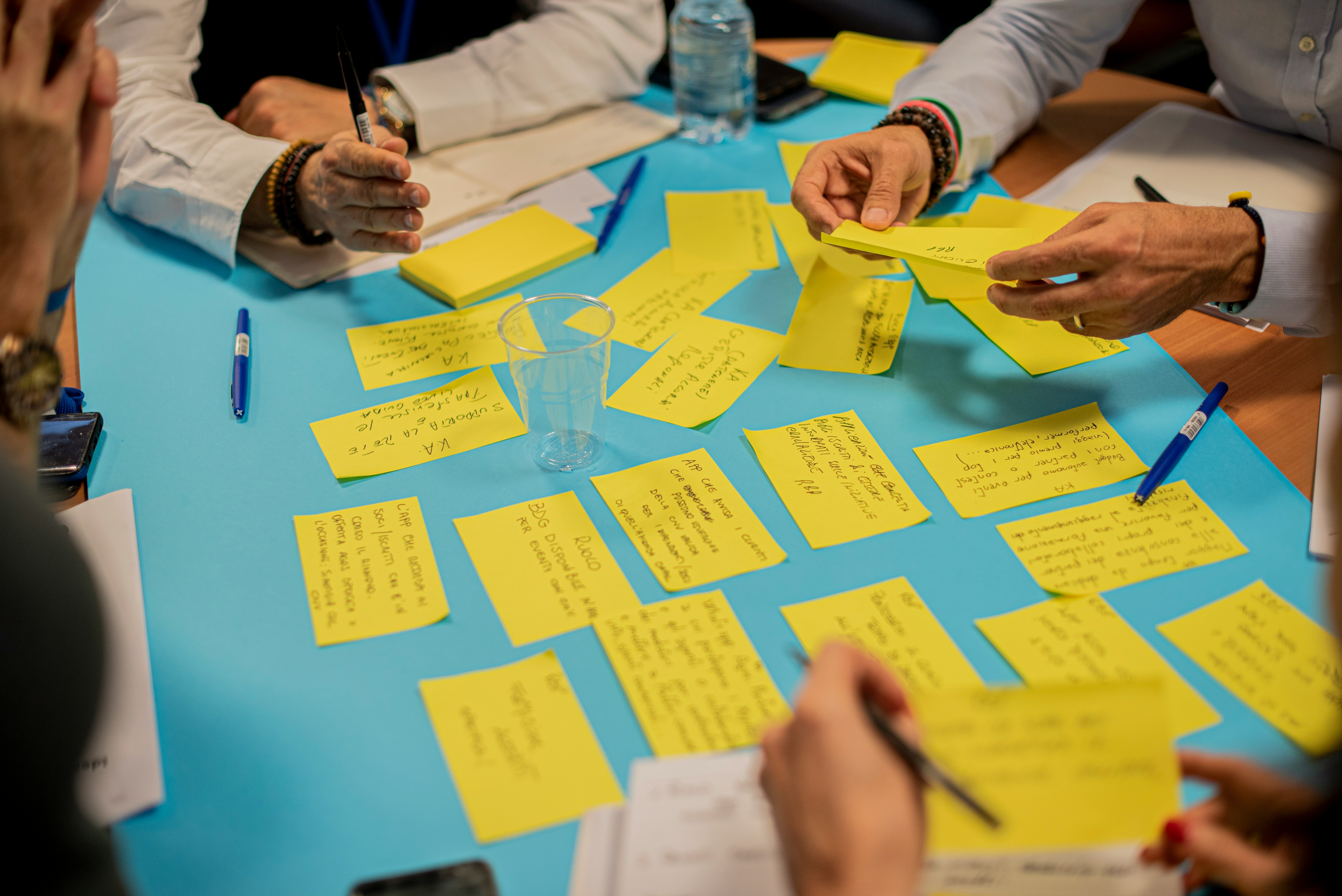
We've been working with several clients to help them address these new challenges. We start with a GIC Action Co-Lab, a facilitated, design-thinking working session that brings together internal stakeholders to turn a tangled question into a clear, defensible plan that speaks in the terms your new internal customers use, and that leadership will champion.
As we've been running these labs with clients, we've found that sustainability teams need to rethink their approach in four key areas:
Using the right language. The framing of sustainability work has to move from an impact-forward narrative to one that addresses risk, return, and audit-readiness. For example, if you present a program to procurement or finance aimed at farmer livelihoods, it won't be enough to say that "this strengthens farmer livelihoods." While this may be true and important, it's not the sentence that will motivate procurement (and release their budget). On the other hand, if you say, "This secures 40% of our almond supply against drought risk and produces supplier data that survives third-party assurance," you are describing the same program in the terms the buyer uses every day.
Building the business case. For many years it's been sufficient for companies to announce a sustainability commitment target and a timeline for hitting it. This, of course, required teams to report on progress through their annual sustainability reports. But in the new world, a deeper level of modeling may be needed. A capital request needs a business case: cost, benefit, payback period, and the downside of doing nothing. Teams that once won internal support with a compelling mission now need to build an airtight cost-benefit analysis that builds the business case.
Capturing reliable data. Many sustainability reports in the past were based on high-level numbers to support commitments, which were backed up by broad assumptions and representative formulas. Now, compliance requirements mean that data must be an "assured disclosure," which reinforces the importance of collecting accurate farm-level data that can withstand an audit from regulators. Getting this data is actually where sustainability teams can bring real strength because it starts with building supplier or farmer trust, then ensuring that the right tools and partners can manage the process on the ground. Specificity and accuracy will create smooth sailing for future budgets and increased impact.
Reframing your objectives. As sustainability grew as a function in many companies, so did the announcements of audacious goals with little in terms of reality checks. The objective was to convince the world that you were a good company doing good things. To some, this looked like greenwashing to improve a company's reputation in the press and with analysts. The CEO, board, and shareholders might have felt good, but the value to the business was limited. The objective has now shifted from "announceability" to defensibility. Goals need to stand up to the scrutiny of critical internal and external stakeholders, including finance, an auditor, or a regulator.
Sustainability spent years asking to be treated as core to the business. Finance, treasury, and procurement are now doing exactly that. The seat at the table is no longer the hard part. The work ahead is learning how to craft the way you speak once you are in the room.
Check out The Fluency Gap, our new self-assessment tool that can help you determine your team's readiness to thrive in this new operating environment. Take a look here or feel free to reach out directly!