REGENERATIVE AGRICULTURE
Climate Farm School: The Culture in Agriculture
Regenerative agriculture is about more than soil. It's about people, relationships, and the systems that make farming possible.

Author
Reena Kawal
August 21, 2026
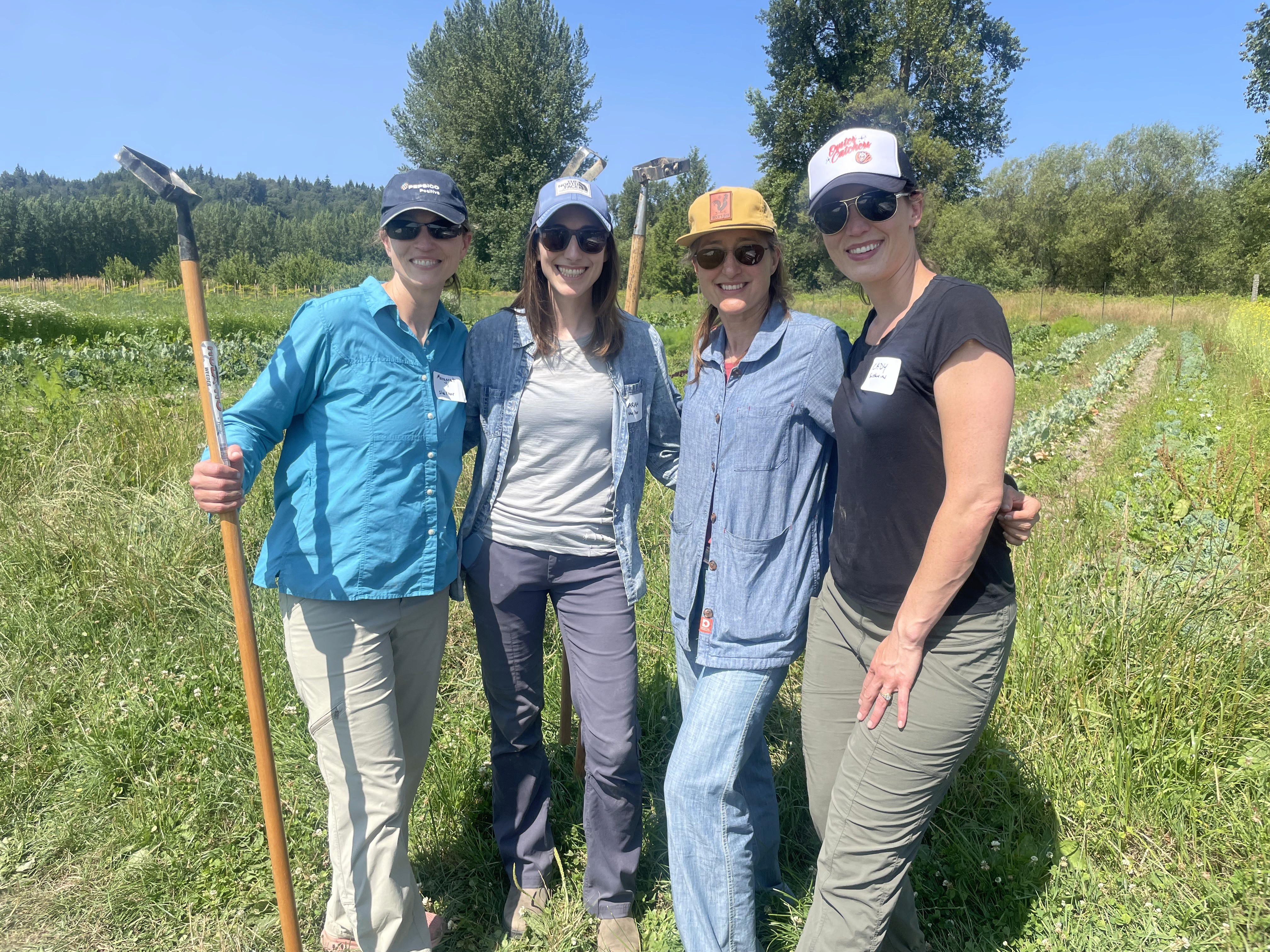
Last month, the Global Impact Collective spent a day at the Climate Farm School, getting our hands dirty in our very own backyard at Carnation Farms. The program brought together farmers, food system leaders, entrepreneurs, and community members who are working to build a stronger future for food, farming, and human health.
Conversations about regenerative agriculture often begin with soil health, but regenerative practices regenerate more than just soil. They can regenerate entire communities, ecosystems, and markets. As a company, we often talk about the importance of centering around farmer livelihoods, so our discussions around this concept resonated deeply with us. But successfully changing farm practices requires understanding the specific context of a particular farm and the systems around it. As Paul Glowaski, Cairnspring Mill's sustainability manager, put it: "The last part of agriculture is culture."
The People Who Farm
Farming today is hard. Beyond the physical toll, there is an immense emotional toll. Are farmers able to make a living? Are farm workers fairly compensated? Are we producing nutritious food? Are there opportunities for new farmers to enter the profession? What will make farming viable for the next generation? Regenerating soil is important, but soil cannot be successfully cultivated without creating conditions where farmers and farm workers can thrive.
"The most important part of the food system is people”, said Interim Executive Director Rob Smith of Viva Farms, a Washington-based nonprofit serving farmers thrive in Skagit and King counties. Viva Farms’ programs help new farmers begin growing with as little as a quarter- or half-acre of land. They then sell what they grow through Viva Farms' established channels. This farm incubator model lowers barriers to entry and creates an accessible pathway into agriculture.
At the same time, it highlights a larger challenge: lasting regenerative practices often require long-term security. If farmers aren’t the landowners or lack confidence that they will have access to it in the future, they won’t invest in practices that improve soil over many years. Supporting regenerative agriculture means supporting access to land, financing, and markets to provide enough certainty for farmers to plan beyond a single growing season.
Similarly, Carnation Farms advocates for its growers. The farm emphasizes fair compensation for workers and participates in the U.S. Department of War's SkillBridge program, which allows transitioning service members to gain civilian work experience while continuing to receive military pay. They believe that the long-term security that comes with strong employment practices translates into the generational knowledge that allows soil health to regenerate and farming to take place sustainably.
The Ground We Farm
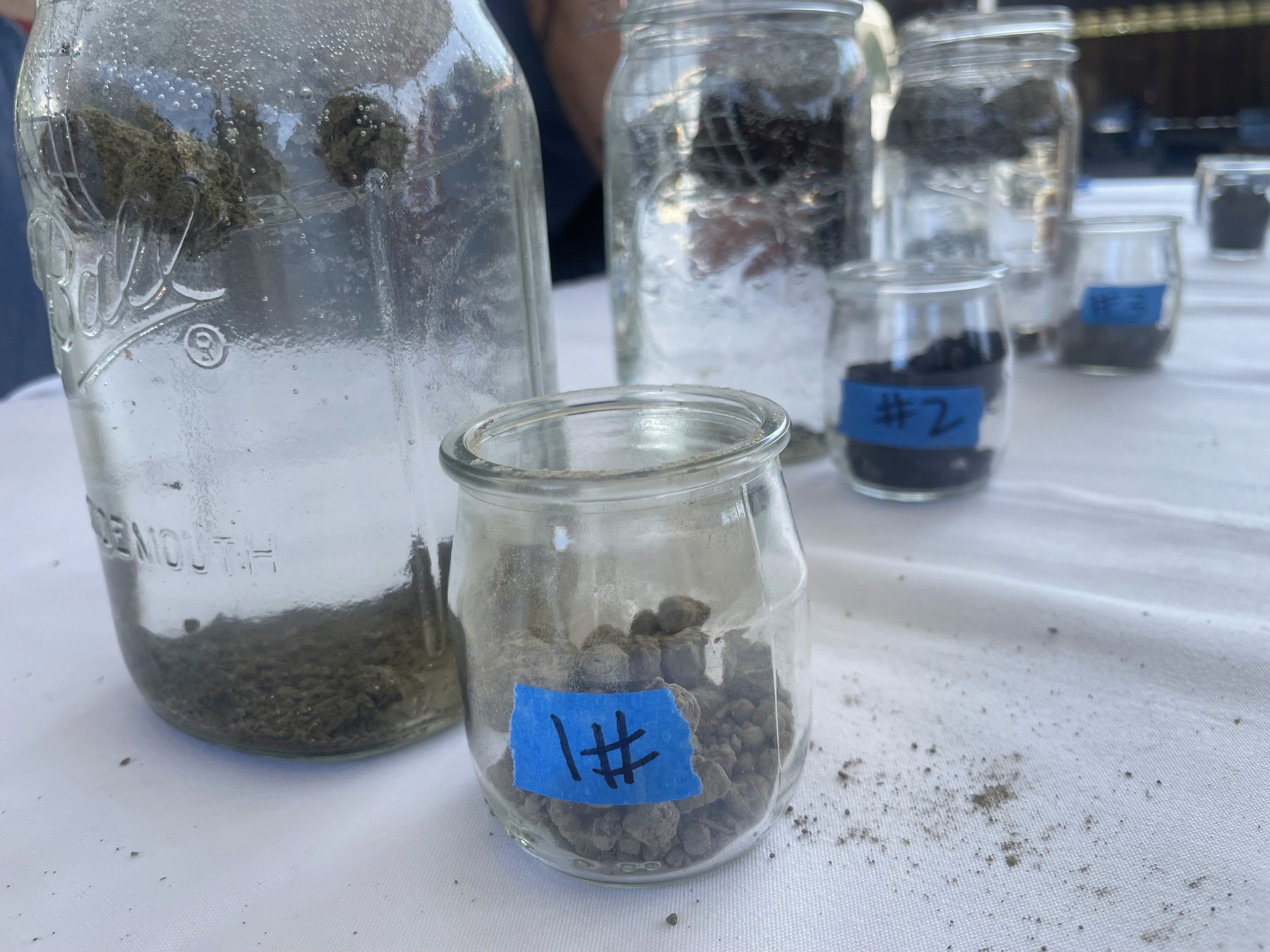
But we weren’t just in the classroom — we got in the dirt at the Climate Farm School. We weeded, we harvested, and we tested soil-health through a slake test — a simple experiment used to assess soil’s aggregate stability and determine how much water the soil can hold. We placed dry soil samples into water and observed how well they held together.
The soil from a conventional potato farm rapidly disintegrated, indistinguishable from the murky water in minutes. A sample from soil transitioning to regenerative practices performed noticeably better. The soil from a long-term regenerative plot remained intact, with the water looking just as clean as it did without the soil. The test clearly showed how healthy soil with healthy organic matter is more resilient to drought and flood. After a winter in which catastrophic flooding covered much of the nearby Skagit and Snoqualmie Valleys, this visual was especially meaningful. Researchers estimate that increasing soil organic matter by just 1% can help an acre of land retain roughly 20,000 additional gallons of water.
The six principles of regenerative farming that build this organic matter are keeping soil covered, minimizing disturbance from tilling and/or chemicals, maximizing diversity of crops, maintaining living roots, integrating animals, and, finally, context. Context is important because there is not a one-size-fits-all solution. While regenerative agriculture is frequently associated with "no-till" practices, participants discussed the importance of "know-till" instead: understanding when tillage may be economically or ecologically necessary. Successful farming requires adaptation to the land and the conditions of that season. If soil health is improving, livelihoods are being sustained, and nutritious food is being produced, then progress is being made and that can be considered regenerative.
Carnation Farms is continually adapting regenerative practices to their local context. Cattle bred for local conditions have smaller hooves that cause less damage to grass during the rainy season. The topography of the farm enables them to graze and fertilize the fields nearly year-round. Dry-farmed tomatoes are watered only during establishment, encouraging deeper root systems, concentrating flavor, and producing more flowers. Hedgerows, herbs, and flowering plants create habitat for beneficial insects. Each practice supports soil health within the realities of that specific ecosystem.
Beyond the Farm
Agricultural viability depends not only on what farmers can grow but on whether communities have the infrastructure to store, process, distribute, and sell what is produced. A farmer can’t grow grain locally without a mill and buyer. The time- and resource-intensive shift to regenerative practices can be profitable only if there are buyers who value quality and sustainability.
Cairnspring Mills demonstrated how those pieces can come together. For their new mill in Oregon, the company worked with growers years before the first harvest arrived. Farmers committed to planting grain three years in advance, and Cairnspring provided long-term purchasing commitments and premium pricing. The arrangement reduced uncertainty on both sides. Farmers gained confidence that there would be a market, while the mill gained confidence that grain would be available when operations began.
The company emphasizes regenerative farming practices for their growers, including restrictions on herbicide desiccants, neonicotinoid pesticides, and biosolid applications. For Glowaski, regenerative agriculture is not only about soil, but also about creating resilience at the farm, community, and personal levels. He describes his approach as going on tour "down to the dirt" to discover who is doing interesting work. By meeting farmers, building relationships, and sharing ideas across regions, he helps accelerate change through connection rather than prescription.
Glowaski sees countless farmers selling their farms after years of crop failure, thinking this is the end. Climate Farm School was created, in part, to help farmers avoid this situation by offering pathways toward resilience and profitability. But trust needs to be built before you can have a conversation about changing practices, especially when the financial risk is high. Meaningful change begins with listening. Before asking someone to change how they farm, you must first understand their circumstances.
The Importance of a Human-Centered Approach
Now is an exciting moment for regenerative agriculture. Unlike the term “organic”, regenerative agriculture does not currently have a single universal definition. While that can make measurement more challenging, it also creates space for innovation. A universally accepted standard may eventually emerge, but today's flexibility allows for fruitful competition. There’s a reason companies like PepsiCo have enrolled over 4.7 million acres in regenerative practices: it makes good business sense, and it protects grower livelihoods. Across the country, farmers, researchers, food companies, and investors are experimenting with new approaches and adapting practices to their unique contexts.
At Global Impact Collective, we use a human-centered approach to understand challenges, during this time of change and innovation, from the perspective of the people closest to the situation and the systems surrounding them.
Climate Farm School provided a powerful reminder of why that matters. Successful regenerative practice goes beyond technical knowledge. It depends on relationships, incentives, infrastructure, trust, economics, and local conditions. People matter. Context matters. And the future of agriculture depends on understanding both.
Resources
Support Organizations
Farmpreneurs — Organization dedicated to the profitability and resilience of community-based farming businesses)
Dirt Capital Partners — Investment firm with regenerative farmer-focus
IndigoAg — Sustainability programs and biological products
Agriculture and Land-Based Training Association (ALBA) — Organization with a mission to create economic opportunities for limited-resource farmers through land-based training in organic farm management
Regenerative Agriculture Standards
Biodynamic Federation Demeter International — A holistic, ecological, and ethical approach to farming, gardening, food, and nutrition considered regenerative agriculture
Local
San Juan Island Agricultural Guild — The FARM (Food, Agriculture, Relationships, Markets) Fund provides critical capital to farmers, producers, processors and distributors to implement projects that strengthen our local food economy
University of Washington Climate Impact Group — Advancing understanding of climate risks & enabling science-based action to manage those risks
Tilth Conference 2026 — Food and agriculture conference in Bellingham, WA; November 16-18
Lopez Community Land Trust — Offers Sustainable Agriculture internships on Lopez Island
Books and Learning
Farm (And Other F Words): The Rise and Fall of the Small Family Farm — Book dismantling misconceptions about American farms and discovers what makes small family farms work, or why they don't
The Reindeer Chronicles — Inspiring stories of working with nature to heal the Earth
Washington Soil Health Initiative — Free online curriculum
Climate Resilience Plan for Washington Agriculture — Supports agricultural viability and vitality through ongoing and future climate change