World Wildlife Fund
WWF was developing a global framework to provide qualitative guidance to key stakeholders in association with UN protocols. We co-designed and facilitated a hybrid workshop, bringing together over 50 international participants.
Facilitation
Global Frameworks
Blue Oceans
The First Nature Positive Framework for Oceans
Challenge
Global commitments to halt and reverse nature loss have accelerated recently, most notably through calls on governments, businesses, and financial institutions to move beyond minimizing harm, toward actively restoring nature. It is especially critical in oceans where marine ecosystems underpin global food systems, livelihoods, climate regulation, and biodiversity, yet face compounding pressures from overfishing, climate change, coastal development, pollution, and expanding ocean industries in international waters.
Why a Nature Positive Framework for Oceans — and Why Now
While momentum around “nature positive” action was growing, there was no clear, science-based, and practical guidance tailored to ocean systems that could help companies, financial institutions, and policymakers translate ambition into credible action. WWF sought to co-create guidance that was both ambitious and usable with a diverse group of stakeholders spanning blue economy sectors, science, finance, and civil society. This initiative had to be completed on a highly accelerated timeline in advance of a June 2025 launch at the UN Ocean Conference.
Implementation
Global Impact Collective was engaged to design and facilitate a co-creation process, ensuring that diverse perspectives could be meaningfully integrated into a shared vision, a clear theory of change, and actionable guidance for nature positive oceans.
Designing for Speed, Rigor, and Inclusion
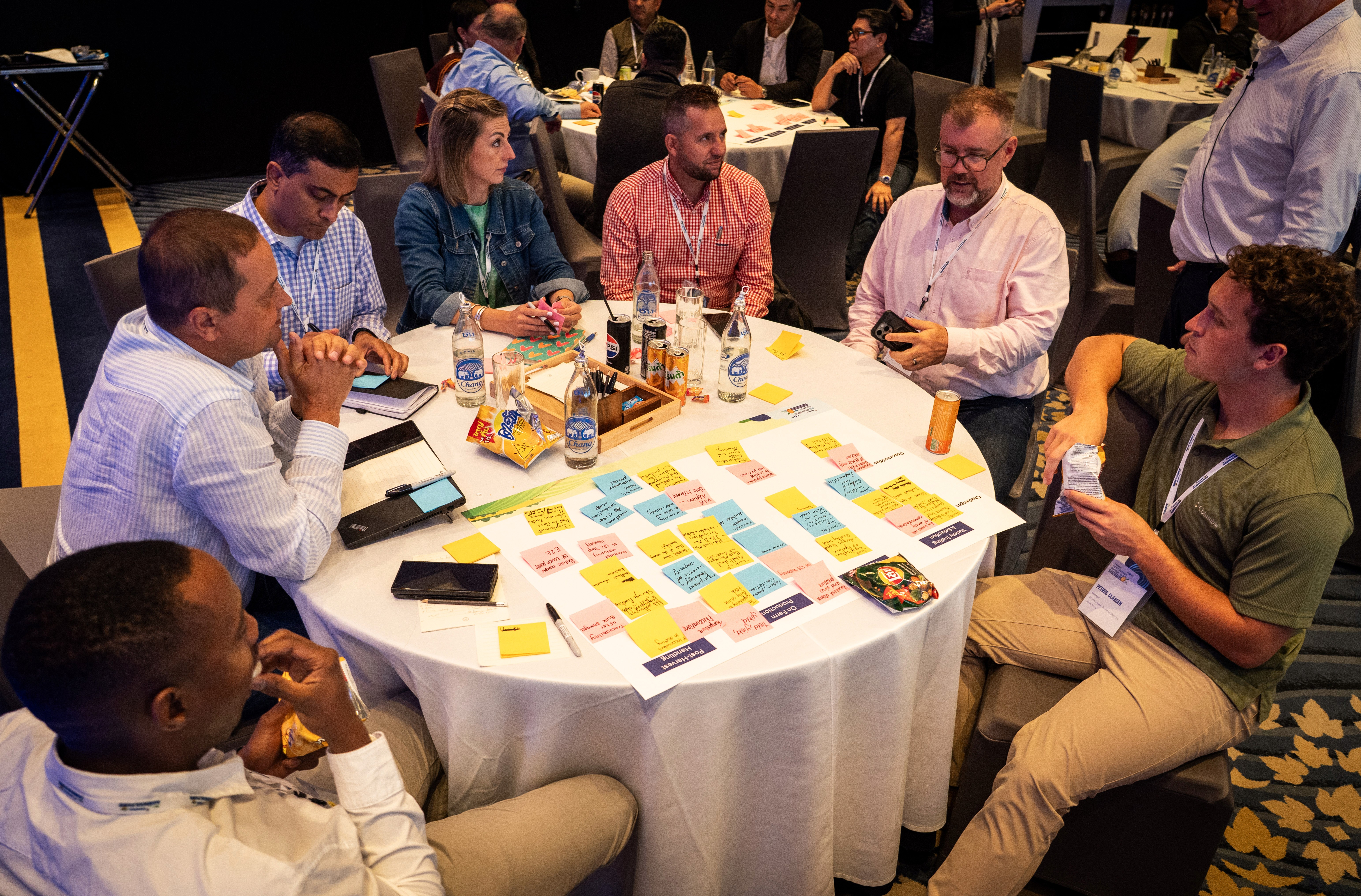
Working within a compressed timeline, GIC partnered closely with the WWF Oceans Team to design and facilitate a dynamic three-day hybrid workshop that brought together over 50 participants — 30 in person and 20 virtual — from 23 countries and six industry sectors, including the WWF global network, corporate partners, financial institutions, academics and key experts.
GIC applied its human-centered design and multi-stakeholder facilitation approach to ensure highly interactive sessions that were culturally appropriate and accessible to the various attendees participating. The sessions were designed to incorporate the following key workshop elements:
Big picture Visioning Exercises: Helped participants think creatively and unearth broad aspirations beyond what was possible across sectors.
Structured Feedback Breakout Sessions: Skillfully designed, small-group breakouts sessions ensured open dialogue to gather critical sector-specific input on the framing, guidance, and recommendations.
Theory of Change Mapping Exercises: Presenting a graphic representation of the current theory of change helped foster discussion for visual learners and pressure test initial thinking. Participants contributed ideas for different sector-specific initiatives (policies, programs, etc.) that could map into the theory of change for final inclusion.
Following the workshop, GIC synthesized participant input into a concise summary of key insights, areas of alignment, open questions, and recommended next steps. This summary and analysis informed the final guidance document released to the public in June 2025.
Impact
Through this intensive, collaborative process, WWF grounded its Nature Positive Framework for Oceans in both cutting-edge science and real-world perspectives from the sectors and institutions critical to its implementation. The process not only strengthened the framework itself but also positioned the framework as a practical tool to catalyze action by practitioners in the ocean space. WWF successfully launched the framework as part of the proceedings of the 2025 United Nations Oceans Conference in Nice, France.